


How Heatwaves Are Changing UK Property Buying in 2026
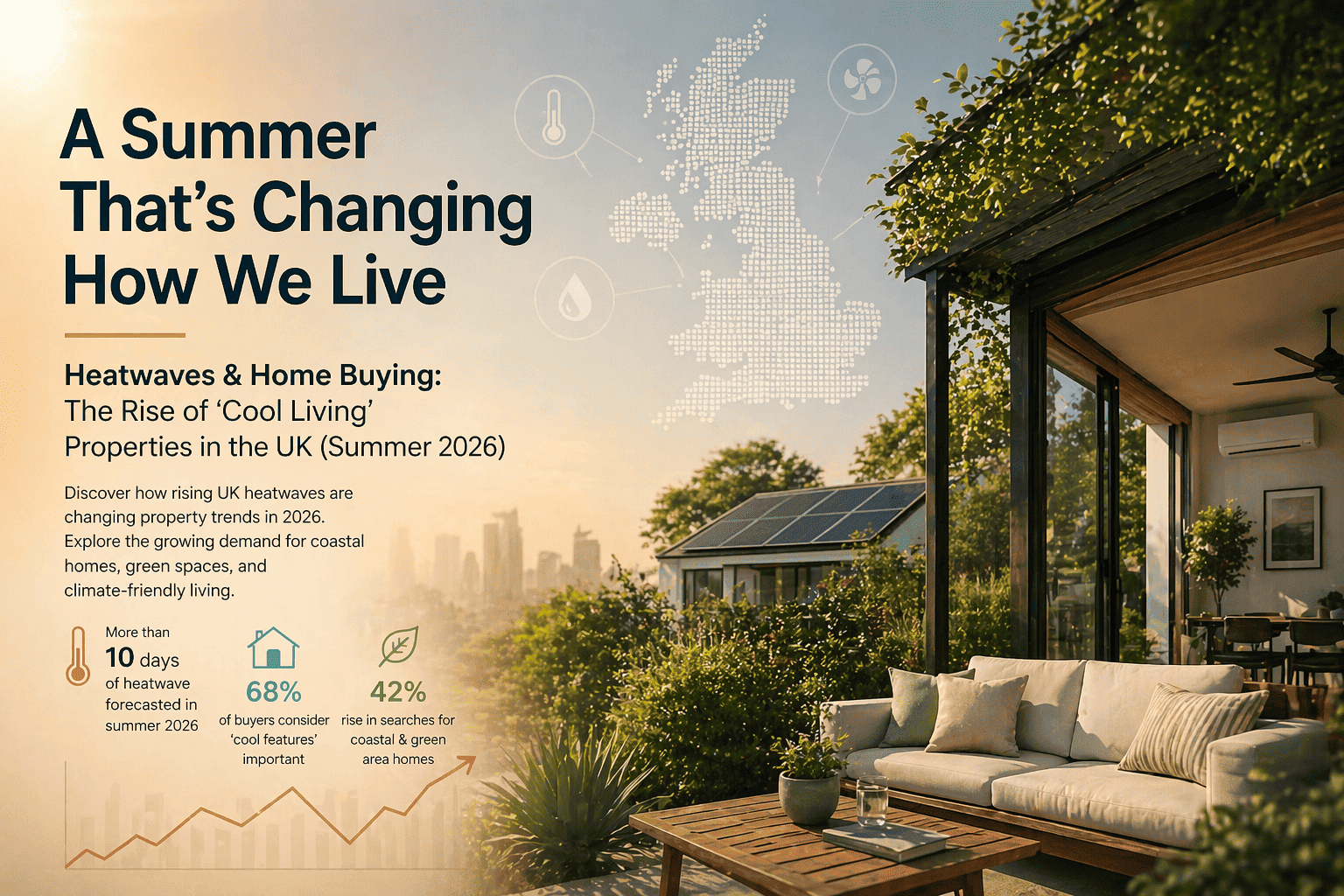
A Different Kind of Summer
There’s something quietly different about summer in the UK now.
It’s not just the longer days or the brighter skies—it’s the weight of the heat. The kind that lingers into the evening, settles into walls, and turns once-comfortable homes into spaces that feel just a little too warm. rising indoor temperatures are influencing not just how we live—but where we choose to live.
And with that shift, something subtle—but powerful—is happening in the property market.
People aren’t just searching for homes anymore.
They’re searching for relief.
And just like that, property search trends begin to shift.
Homes that once appealed for their size or location are now being judged on something far more immediate:
How comfortable do they feel in the heat?
When Comfort Becomes a Priority
Not long ago, property decisions revolved around familiar questions:
Is it close to work? Is the price right? Does it have enough space?
In 2026, a new question has quietly joined that list:
“Will this home stay comfortable in summer?”
It’s not always asked directly, but it shows up in behaviour. Buyers linger longer in garden photos. They zoom in on tree cover. They look for words like “airy”, “well-ventilated”, “near water”.
Comfort—once assumed—is now being evaluated.
The Quiet Rise of “Cool Living” Homes
Across the UK, a subtle but powerful trend is emerging.
Buyers are increasingly drawn to properties that offer natural cooling—homes near water, surrounded by greenery, or designed to breathe with the environment.
It’s not a new concept, but it’s becoming a priority. Buyers are naturally gravitating toward homes that offer:
- A gentle coastal breeze
- Open surroundings that don’t trap heat
- Natural cooling from nearby water
Waterside homes, in particular, have always carried a certain charm. But in 2026, their appeal goes beyond lifestyle—it’s practical.
And while these homes have always been desirable, they are now being seen through a new lens:
They don’t just look better—they feel better.
The Return of Green Space
If water brings coolness, greenery brings comfort.
Across the UK, homes with mature gardens, shaded patios, and nearby parks are attracting a different kind of attention this summer.
It’s not just about aesthetics. It’s about experience.
A tree-lined garden can reduce the perceived temperature of a home. A shaded outdoor space can transform how a property is used during warmer months.
And for many buyers, especially those working from home, this matters more than ever.
Beyond Location: What Makes a Home Feel Cooler?
Step inside a well-designed summer home, and you’ll notice the difference immediately.
It’s in the way light moves through large windows.
In the shade created by mature trees.
In the gentle airflow that travels from one room to another.
Today’s buyers are paying closer attention to:
- Orientation
- Garden space
- Ventilation
- Natural surroundings
These are no longer extras—they’re decision drivers.
Rethinking City Living
Urban life still holds its energy and convenience, but summer is revealing its trade-offs.
In dense areas like London, heat tends to linger. Buildings absorb warmth, streets radiate it back, and airflow becomes limited.
This doesn’t mean people are leaving cities altogether.
Instead, they are becoming more selective.
Properties near green spaces, rivers, or quieter neighbourhoods are seeing increased attention—even within major cities.
In dense urban areas like London, heat retention is becoming a real concern.
Meanwhile, cities like Manchester and Birmingham are seeing demand shift toward greener, less dense neighbourhoods.
Homes That Feel Like a Breath of Fresh Air
A riverside cottage where mornings begin with mist rising from the water.
A coastal home where sea air drifts through open doors.
A countryside retreat surrounded by shaded gardens.
These aren’t just properties—they’re responses to climate.
Each of these properties represents more than just a location—they reflect how buyers are thinking differently.
Is This Just a Summer Trend?
It would be easy to assume that this is temporary—that once temperatures settle, buyers will return to old priorities.
But the shift feels deeper than that.
Over the past decade, energy efficiency quietly moved from a bonus feature to an expectation.
Something similar may now be happening with climate comfort.
Homes that adapt to changing weather conditions are likely to hold stronger long-term appeal.
Not because they are trendy, but because they are practical.
The UK property market in 2026 isn’t being driven by dramatic headlines or sudden changes.
It’s being shaped by something quieter.
A gradual shift in how people experience their homes.
A growing awareness of comfort.
A subtle redefinition of what “livable” really means.
And as summer continues to evolve, so too will the way we choose where—and how—we live.
Homes in 2026 are no longer judged only by price or postcode.
They are judged by comfort, adaptability, and environment.
And that is where the future of property is heading.